In progress and under consideration – Journal 7 – What are you made of?
In Progress and Under Consideration is a reflective series prepared for Publishing 201 – the Publication of the Professional Self. This series is in part a fulfillment of a pre-discussed and agreed upon exchange of academic services and goods, and also a personal reflection on where I’m going and whatever it is I’m doing here.
There’s an important phrase in the contemporary arts that says that ‘the medium is the message.’ I think it’s also perfectly applicable to marketing and branding. How you decide to disseminate you story (over social media, television, or carrier pigeon) will change how it reaches your audience, how it’s perceived, and what it means when it gets there. Thus, every marketing campaign has to start with asking who the audience is, and how best they can be reached. The other element of the equation, is in the content. The choice of content also affects who your potential audience is. If you approach 20-somethings on student loans with a Buick, well, it ain’t gonna work. So the campaigns that I find memorable are the ones that are super conscious of their medium, and the content they chose to transmit.
The first one that comes to mind right now is Spotify’s Thanks 2016, It’s been weird, which was rolled out at the end of November 2016. The advertising campaign was used in 14 countries and used aggregate and anonymized data (of which Spotify has tons) and used it to craft super specific, often hyper-localized messages about people’s listening habits. The ads are funny in a dark sort of way. Which also makes great sense considering the general public sentiment at the time being that 2016 had been terrible. Spotify gets points for the innovative use of data, that though aggregate and anonymized, yields unique insights. I’m reminded of a similar observation by Dave Anderson the VP Content Sales with Rakuten Kobo who said that Brazil is a big (abnormal) consumer of poetry & philosophy, It’s not something I’m likely to use but it’s special and I won’t forget it. Details like those are the unique benefit of data, and can be creatively used in a campaign. In February, Spotify ran another campaign in the US with a similar tone, this time focusing on the very specific names that people gave their music playlists (something that had been done in at least one ad in Thanks 2016).
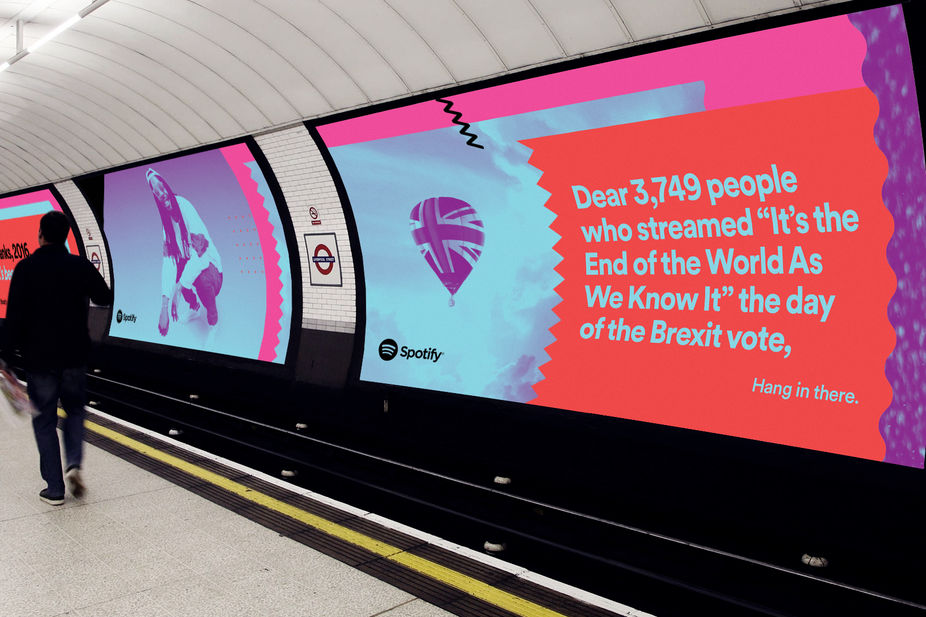
Thanks 2016, It’s been weird. Spotify, UK.
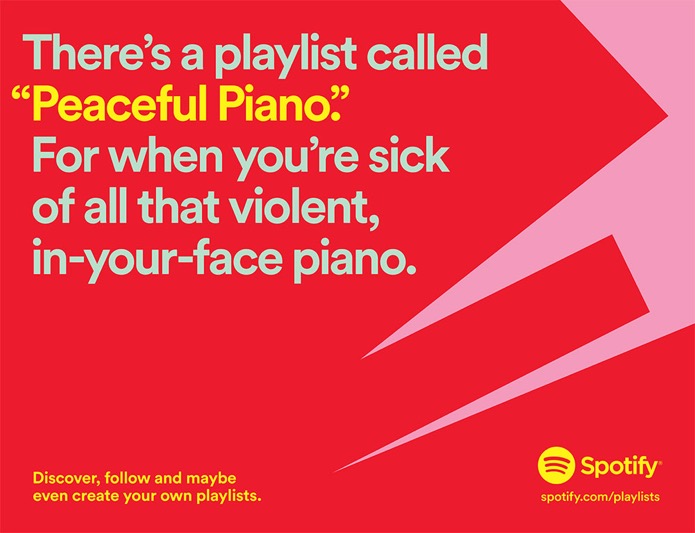
Spotify, US.
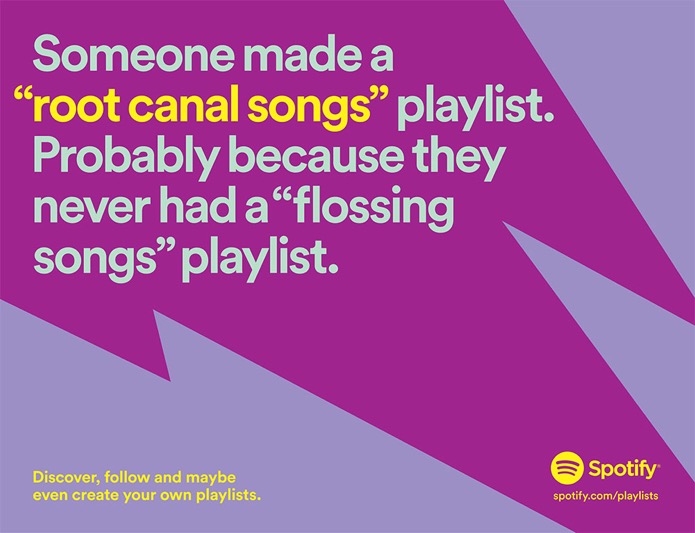
Spotify, US.
The second campaign is from a bookstore in Mexico called Ghandi. Since 2001 they’ve been running this text-based marketing campaign on Bags, Bookmarks and Billboards. They occasionally modify their template to incorporate an image or graphic, but generally present black text straight on the same bright yellow. The messages are always quirky and ask you to read, sometimes forcefully, often with puns, and occasionally by making typographic errors that suggest you should be reading. Due to the use of text it’s similar to Spotify’s two campaigns, and I’m probably drawn to them in part because of my interest in writing and text-art. Another important similarity between these campaigns is in how the references are sometimes very coded with localized knowledge. One of Spotify’s London ads specifically referenced the closing of the iconic nightclub Fabric as a result of gentrification in the area. Beyond the ones I’ve added here, I’ve seen Ghandi billboards that reference such diverse things as protests (and traffic), graffiti, socialism, traffic control regulations, and the book to movie pipeline,
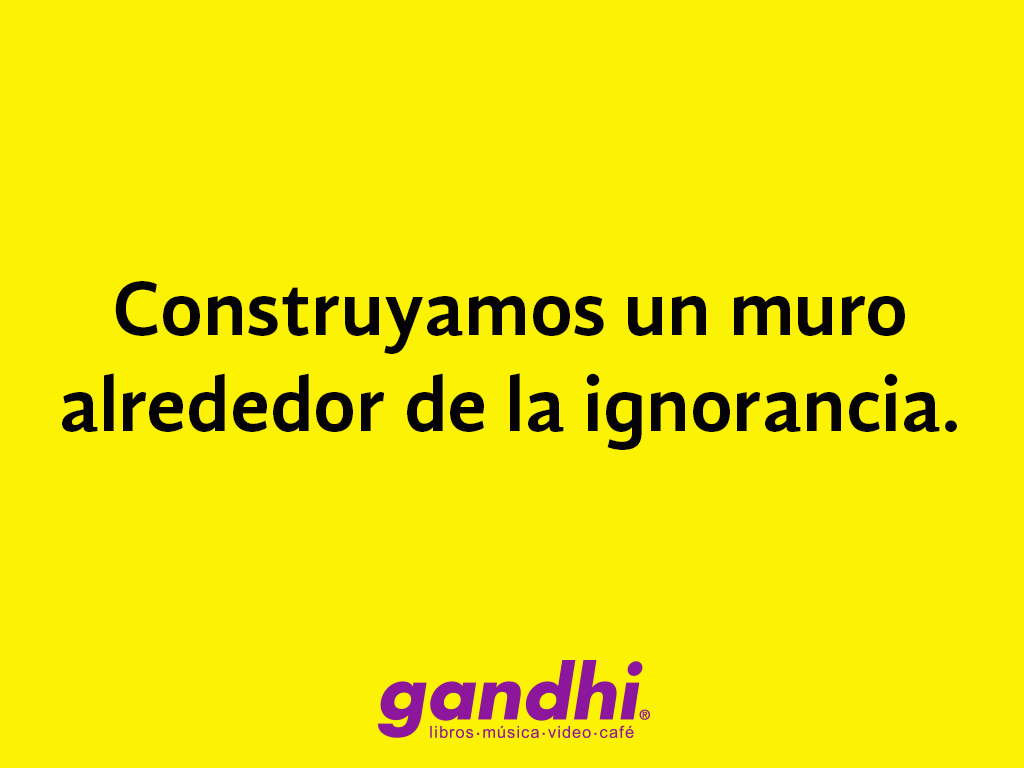
Billboard, Ghandi, 2016. Trans: “Let’s build a wall around ignorance.”
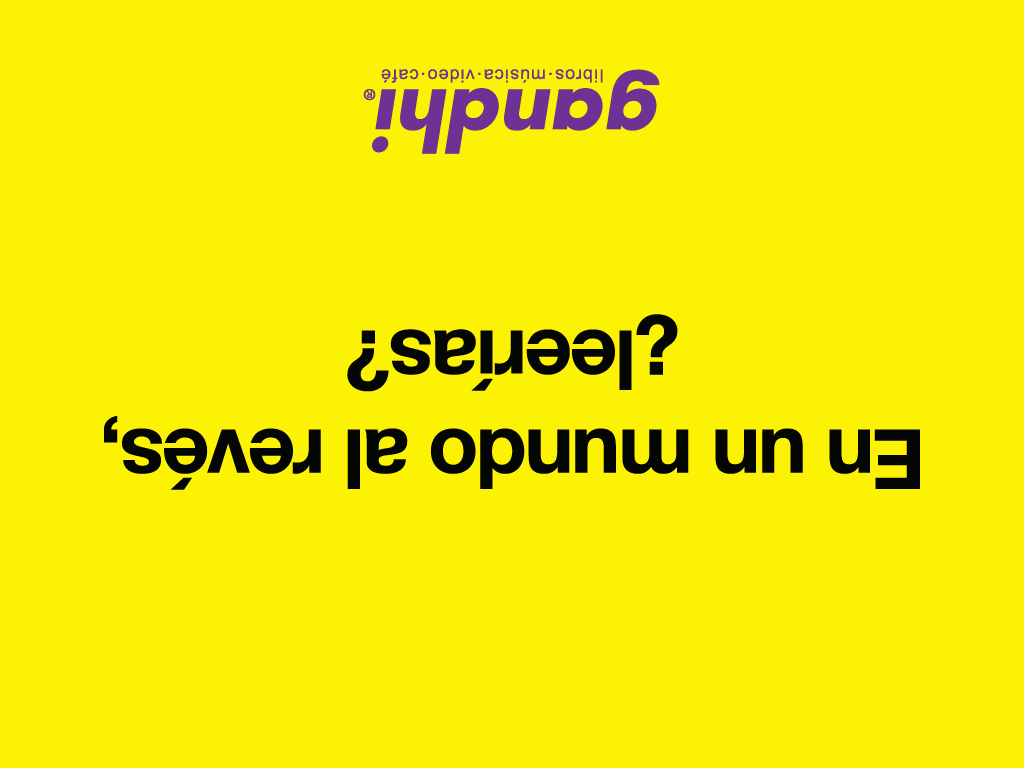
Billboard, Ghandi, 2009. Trans: “In an upside down world, would you read?”
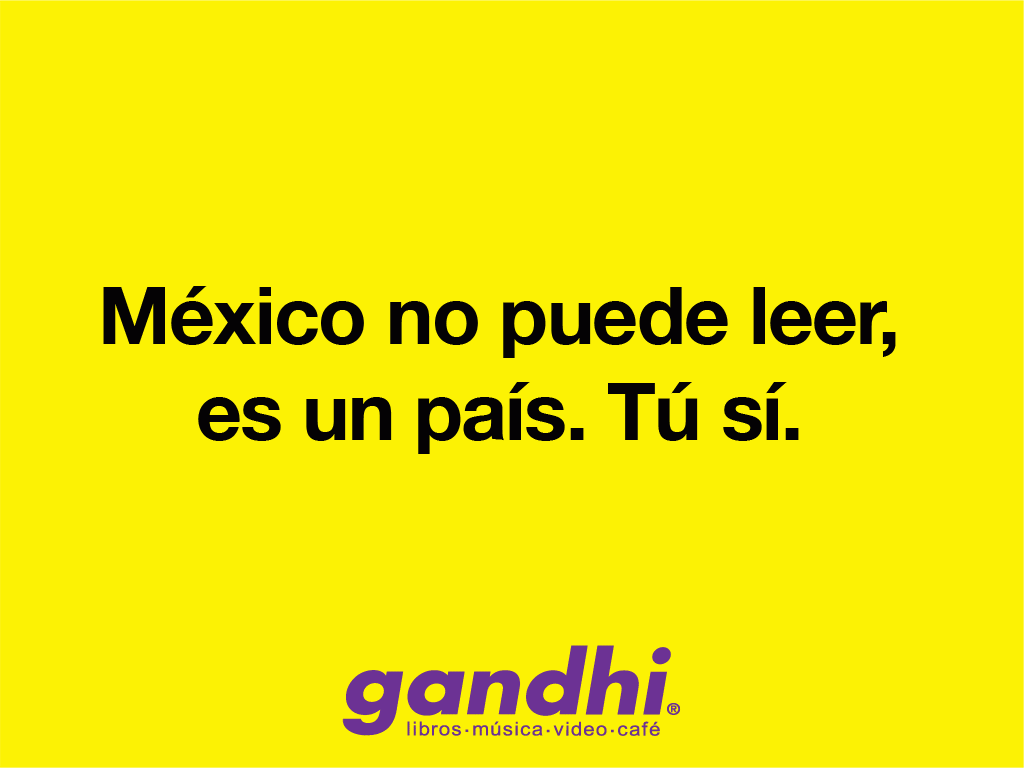
Billboard, Ghandi, 2012. Trans: “Mexico can’t read, it’s a country. You can.”
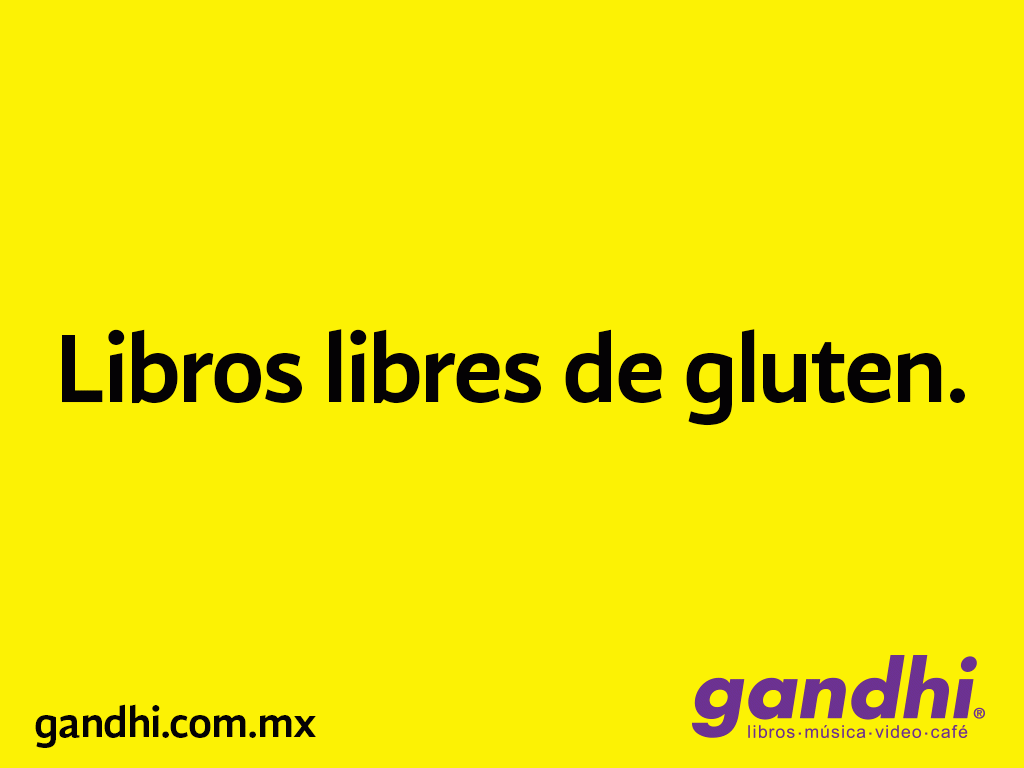
Billboard, Ghandi, 2015. Trans: “Gluten free books.”
The reason I like these campaigns is because they use qualities that are intrinsic to the brand they’re attached to. So they are in a way medium specific and content specific. The campaigns understand what sets their products apart and then do something fun with it. Spotify uses music references, the customizability of playlists, and the scores of anonymized data it collects to present messages that are both incredibly funny and also very timely. By presenting it’s findings in public it also allows us to share in that knowledge anonymously. We’re simultaneously able to find a quote ridiculous, and incredibly relatable without anyone knowing. Meanwhile, Ghandi similarly uses humour (specifically puns) in its long running campaign, but instead draws connections between manners, reading, literacy, and the imagination. In so doing, It acts very much as a public information campaign in the public interest (reading!). It thus becomes this strange physical version of your parents telling you what to do when you were a child. This is why I also like both campaigns, because they’re public campaigns that invite you to engage with them in public spaces. Both use a traditional format, but one that is shared and largely visible by everybody. Neither of these campaigns would be particularly effective in the same way as photographs or videos on social media. (though the second spotify campaign did make three videos which interviewed artists included in really weird playlists – again playing to the strengths of the video format). Online, you can like, and share, and then it disappears, subsumed under tomorrow’s content. That billboard though? It’s always going remind you that you’re not alone, and that you should pick up a book.